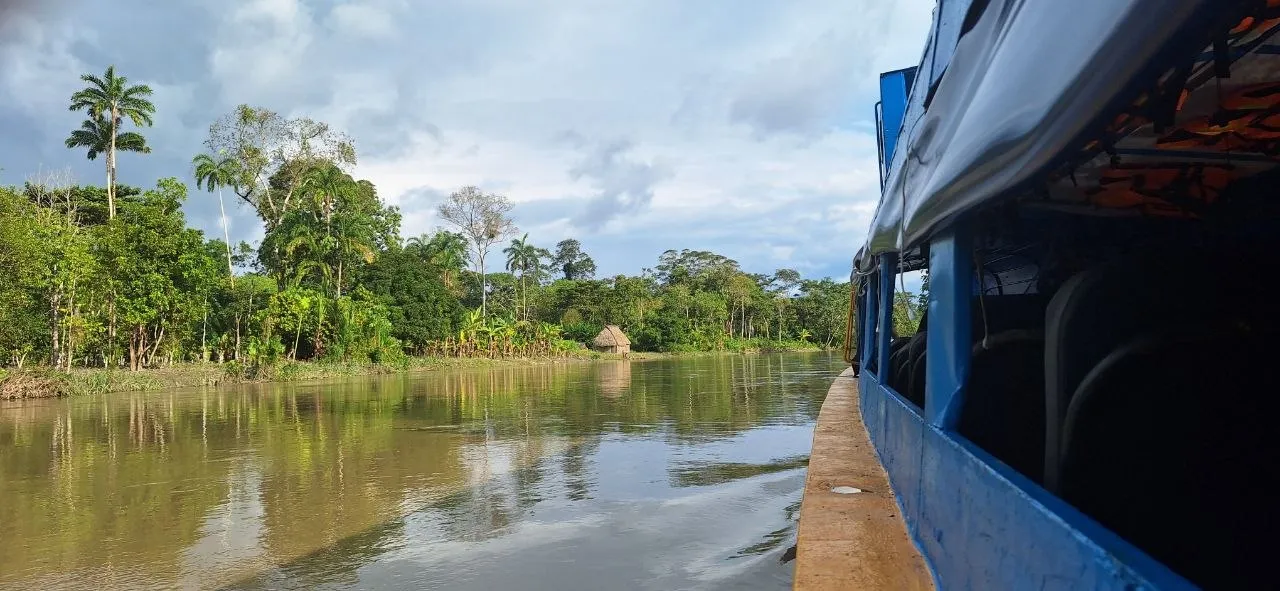
Amazzonia - in barca tra Ecuador e Peru Amazonia – by boat between Ecuador and Peru
Dodici ore di bus mi portano dalle alture Andine a El Coca: la città-frontiera con l’Amazzonia Ecuadoriana. Da qui inizierà il mio viaggio della speranza, 500km sul fiume Napo fino a Iquitos, Peru, la più grande città del mondo non raggiungibile via terra. A Iquitos inizierò un altro viaggio tra i fiumi per raggiungere il volontariato che ho sempre sognato: una riserva sperduta nella foresta, per salvare uova di tartaruga e aprire sentieri con il machete. Ma andiamo con calma.
Il taxista che mi porta dalla stazione dei bus all’hostal mi dice di ‘tener cuidado por la calle’ (fare attenzione in strada) a quell’ora di notte. Ma durante il viaggio in bus ho mangiato solo dei choclos tostados (mais tostato) e dei pepinillos (una specie di cocomero piccolo che sa di cetriolo) e la mia fame è più grande della paura de las calles de El Coca. Felpa con cappuccio per nascondere l’essere gringo e mi dirigo all’asadero (griglieria) di quartiere. Poche cose mi rendono più felice che trovare, alle due di notte, la combo riso-fagioli-braciole-repollo-platano-aji-chicha.
Mi fermo i due giorni seguenti a El Coca, per curiosare in giro e recuperare le forze prima del viaggio che mi aspetta. Vorrei visitare i Waorani (indigeni) per cacciare con loro nudo nella foresta, mangiare scimmia stufata con riso, e bere la chicha fermentata, masticata e sputata dalle loro donne. Ma non ne ho il tempo: la riserva in Peru dove farò volontariato mi aspetta la settimana seguente.
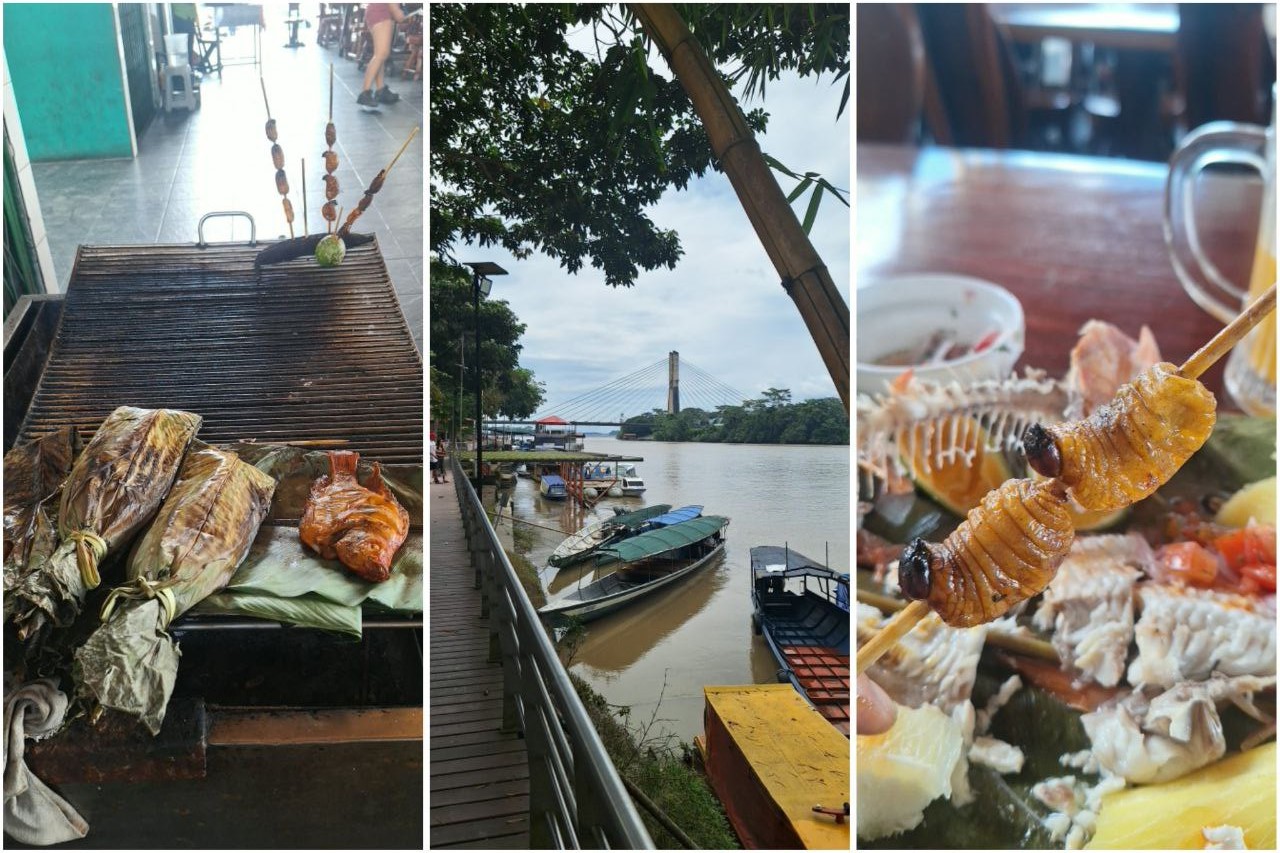
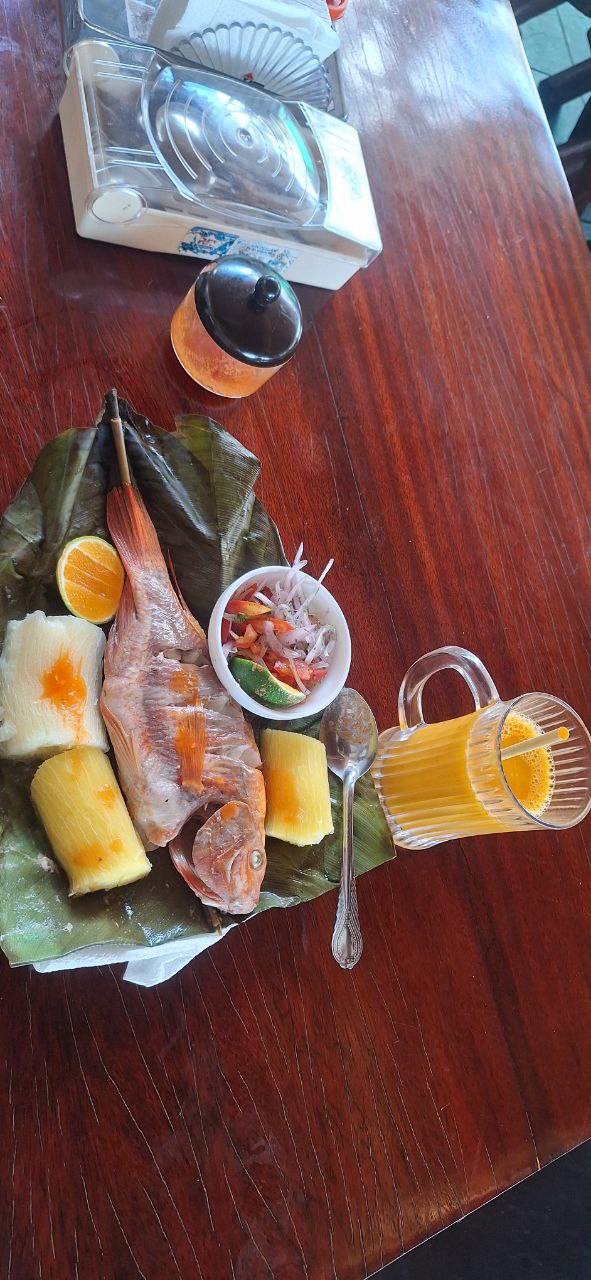
Ne approfitto per provare cibo e bevande della selva Ecuatoriana. Il maito è pesce chiuso in grandi foglie di platano con yucca e platano, cotto sulla griglia. Viene spesso servito con diversi tipi di chicha, una bevanda fermentata. Non mi dispiace la chicha de chonta, prodotta dal frutto rosso di una palma che cresce solo in Amazzonia. Nel tronco marcio caduto della stessa palma, cresce uno snack molto più sfizioso: i chontacuros, larve grasse e grandi come un pollice, fritte o alla griglia sono croccanti fuori e morbide burrose dentro. Anche mangiate vive hanno il loro perché, ma perdono il loro crunchy esterno e mi sento un po’ come Simba (‘viscido… ma saporito’).
Scopro la mia nuova bevanda rinfrescante preferita: la guayusa è l’infuso di una pianta simile al mate o al the verde, servita fredda, sembra un Estathè senza zucchero, ma energizzante. Le foglie di guayusa, arrotolate e appese come ghirlande, si vedono ovunque nei comedor o nei mercati.
Qua non sono più al fresco come sulle Ande: c’è tanta umidità, e quando il sole esce e batte sulla testa mi spacca in due. Per proteggermi, compro un cambio extra di abbigliamento lungo e leggero. Mi servirà nelle prossime settimane anche contro il mio nemico numero uno: le zanzare.
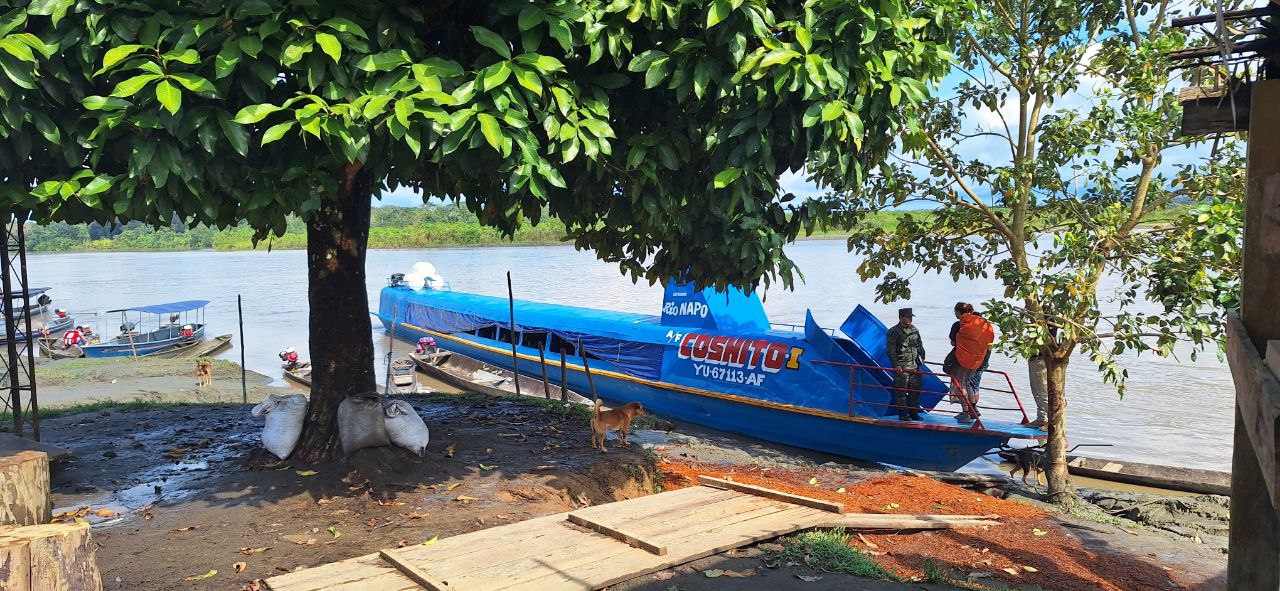
La mattina del terzo giorno, colazione al volo con tigrillo (platano verde tritato e fritto con uova e carne) ed arrivo al molo giusto in tempo per salire sulla mia prima lancha (barca) in Amazzonia.
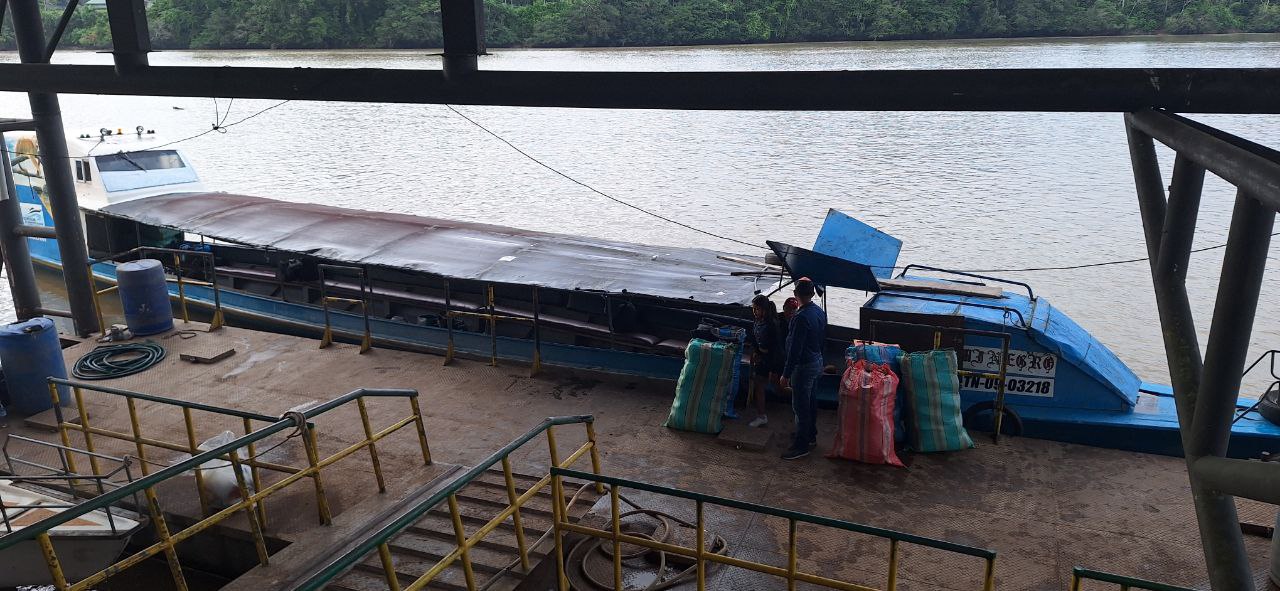
La lancha è affollata e il viaggio lungo il Rio Napo procede tranquillo. Passo il tempo scrivendo, e ogni tanto chiacchierando con i miei vicini. Ogni tanto le galline nei sacchi di iuta starnazzano e alcuni cuccioli di cane cagano a spruzzo nelle loro gabbie improvvisate. Quando inizia a piovere tiriamo giù un telo nero di plastica che ci divide dal resto del mondo, e mi sento dentro una busta dell’immondizia.
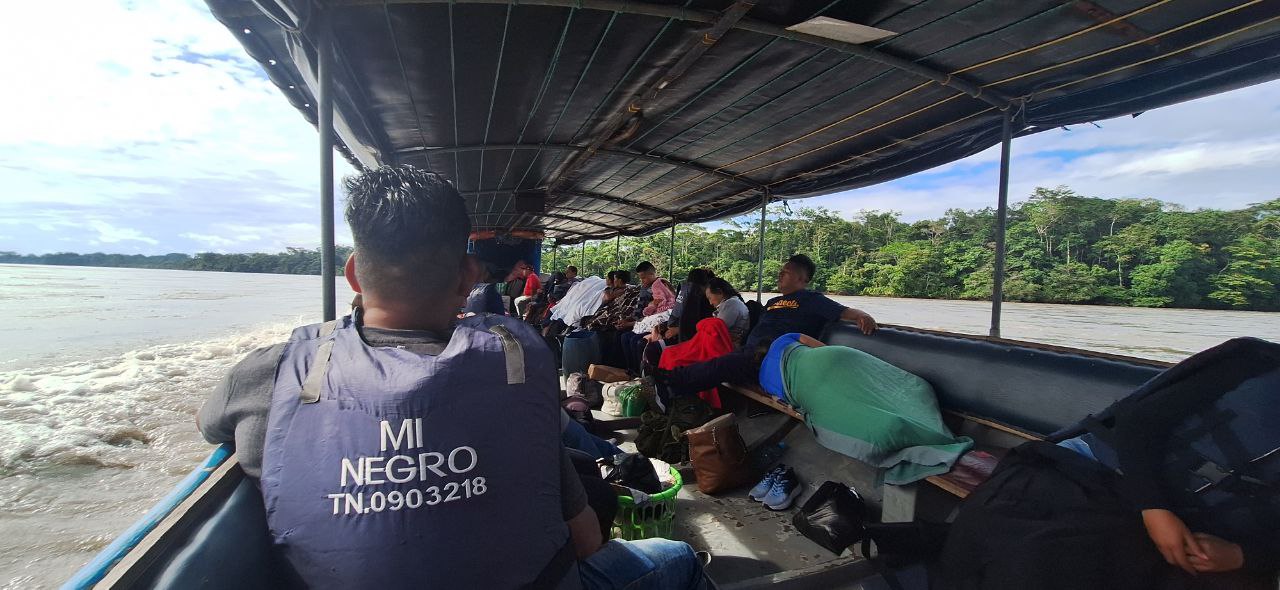
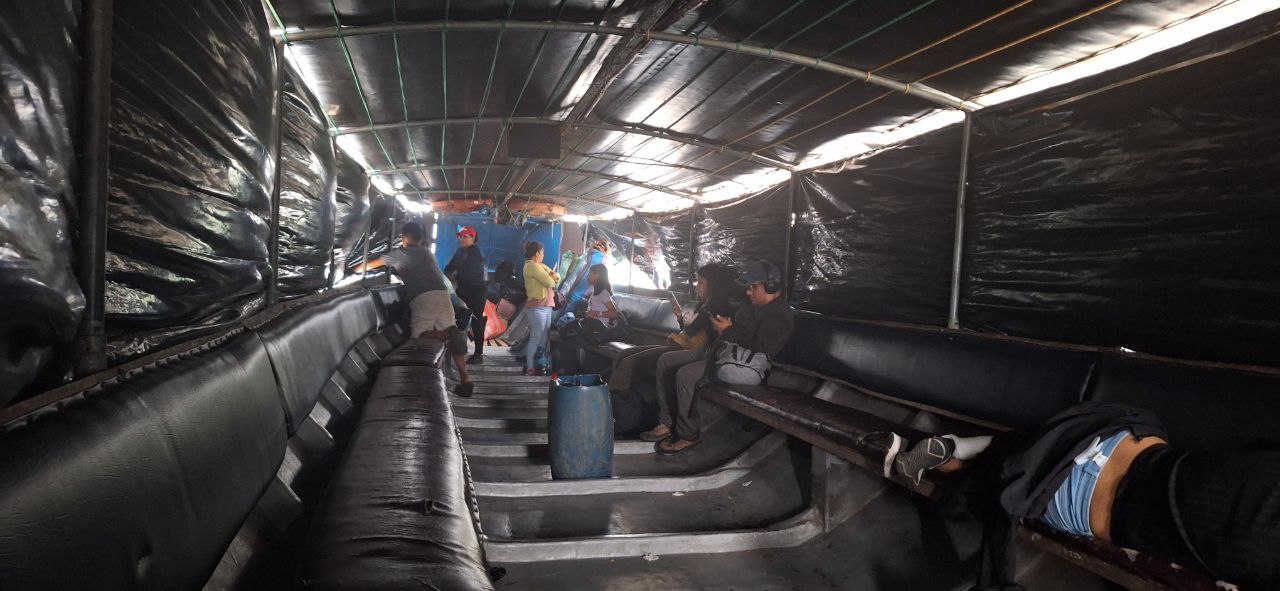
Dopo dodici ore e diverse fermate in comunità in mezzo al nulla, rimaniamo sulla barca solo io e una suore con due ragazzine. Arriviamo prima del tramonto a Nuevo Rocafuerte, le ultime quattro case in croce prima della frontiera con il Peru.
Nel giro di un’ora trovo quello che mi serve: la polizia di frontiera per il timbro di uscita dall’Ecuador, una stanza per la notte nel retro di un minimarket, e un costoso passaggio per la frontiera il giorno dopo. La frontiera è a più di un’ora di barca e l’unico modo che trovo per arrivarci è contrattare un passaggio con due ‘pescatori’ (sembrano più dei trafficanti..). Il passaggio mi costa caro perché non ci sono altri viaggiatori con cui dividere il costo del carburante, e in più si aggiunge l’immancabile implicita ‘gringo tax’; ma per stavolta va bene così.
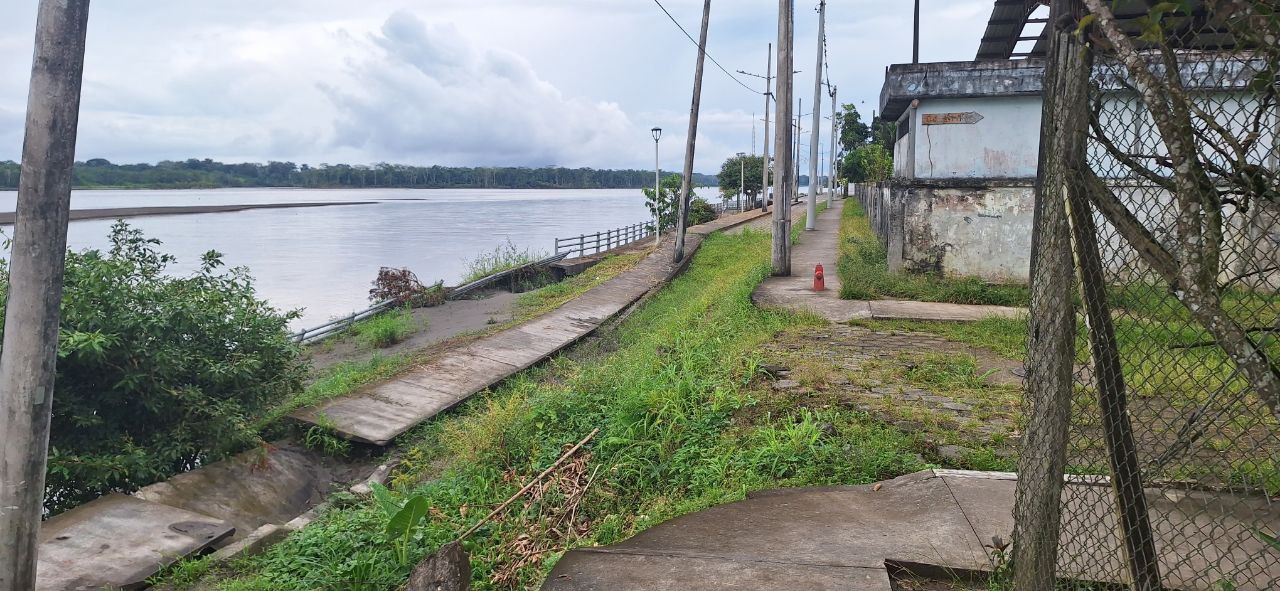
Passo la serata passeggiando tra statue di delfini rosa - sì, esistono veramente e si vedono spesso in questi fiumi dell’Amazzonia - e strade distrutte dalle ultime piene.
Il mattino dopo i due ‘pescatori’ mi portano in Peru, nella prima piccola comunità di frontiera, Cabo Pantoja. Gli orari delle barche pubbliche per Iquitos sono imprevedibili e mi aspetto di dovermi fermare qua almeno un paio di giorni per aspettare la prima.
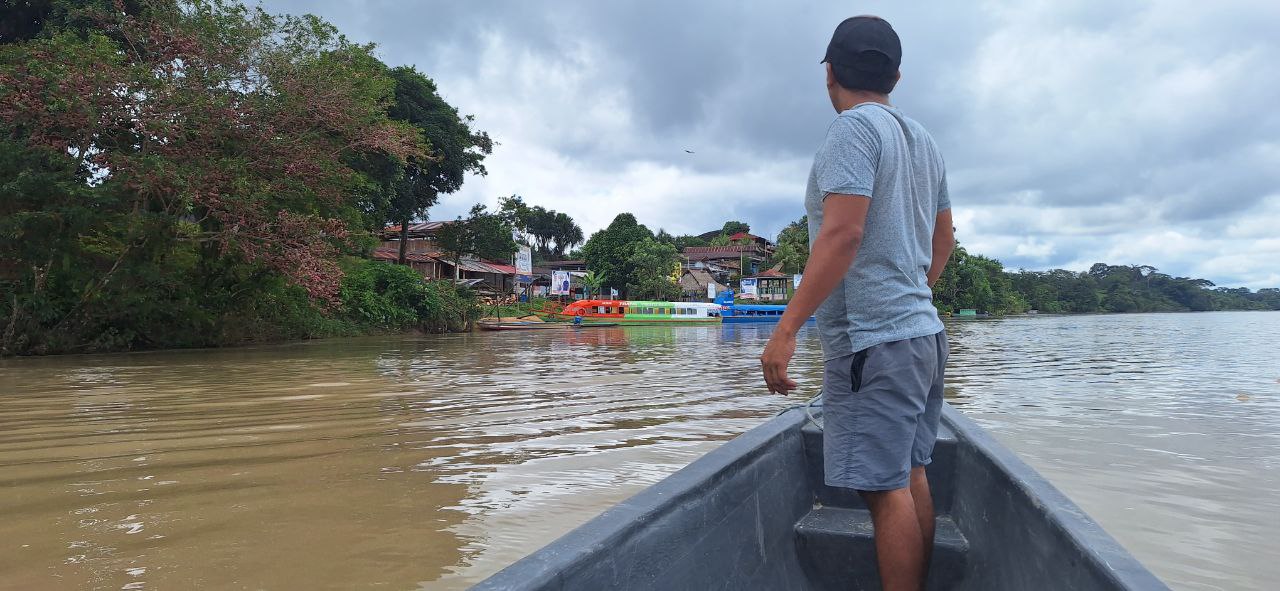
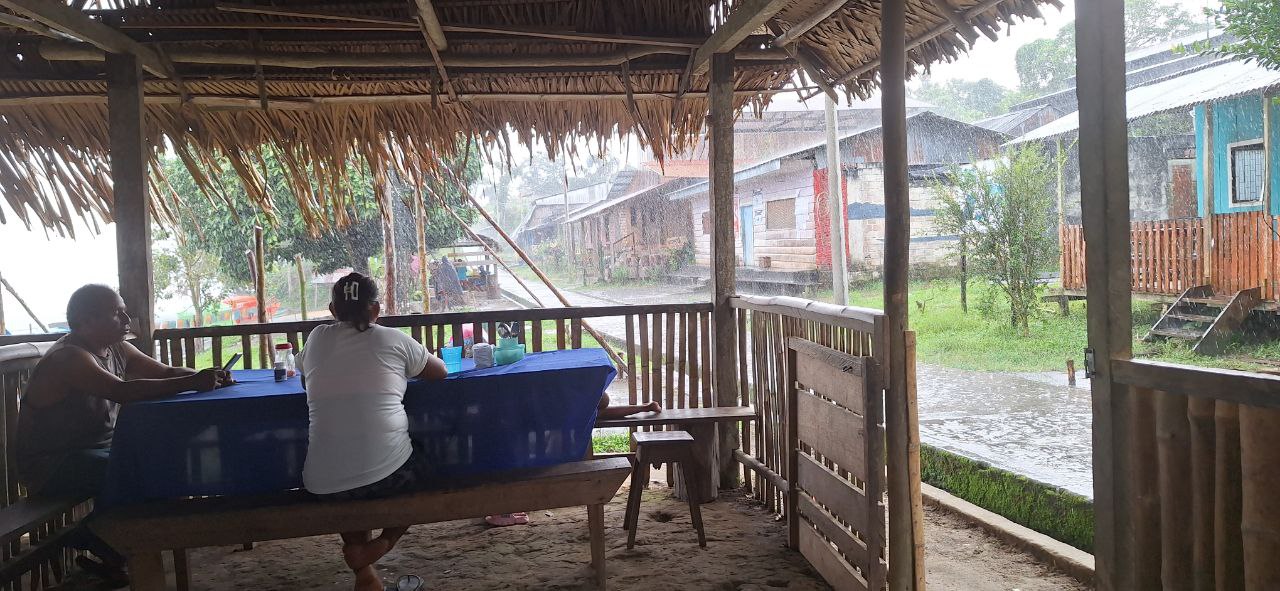
Invece, neanche il tempo di mettere un piede a terra - letteralmente - che una banda di strani personaggi si sporge dalla finestra di una lunga barca, gesticolando e chiamandomi: mi dicono che partiranno per Iquitos tra poche ore. Che sarà a malapena il tempo necessario a cercare l’introvabile poliziotto di frontiera - ovviamente non è in ufficio - per farmi timbrare il passaporto. All’ora di pranzo una signora mi ospita sotto la sua tettoia, per ripararmi dall’ennesimo acquazzone improvviso. Sta preparando da mangiare per i soci della barca, che mi invitano a mangiare con loro. Ho a malapena attraversato la frontiera e mi accorgo subito della differenza di accento: parlano rapidamente e si mangiano le parole, a differenza della parlata chiara ecuatoriana. Dopo un paio di battute su mujeres e foootball (sempre i migliori icebreakers che travalicano qualsiasi confine geografico), i soci mi spiegano che hanno da poco fondato una compagnia di trasporti fluviali e questo sarà il loro primo viaggio. Arriveremo a Iquitos la sera del giorno successivo, poco più di 24 ore.
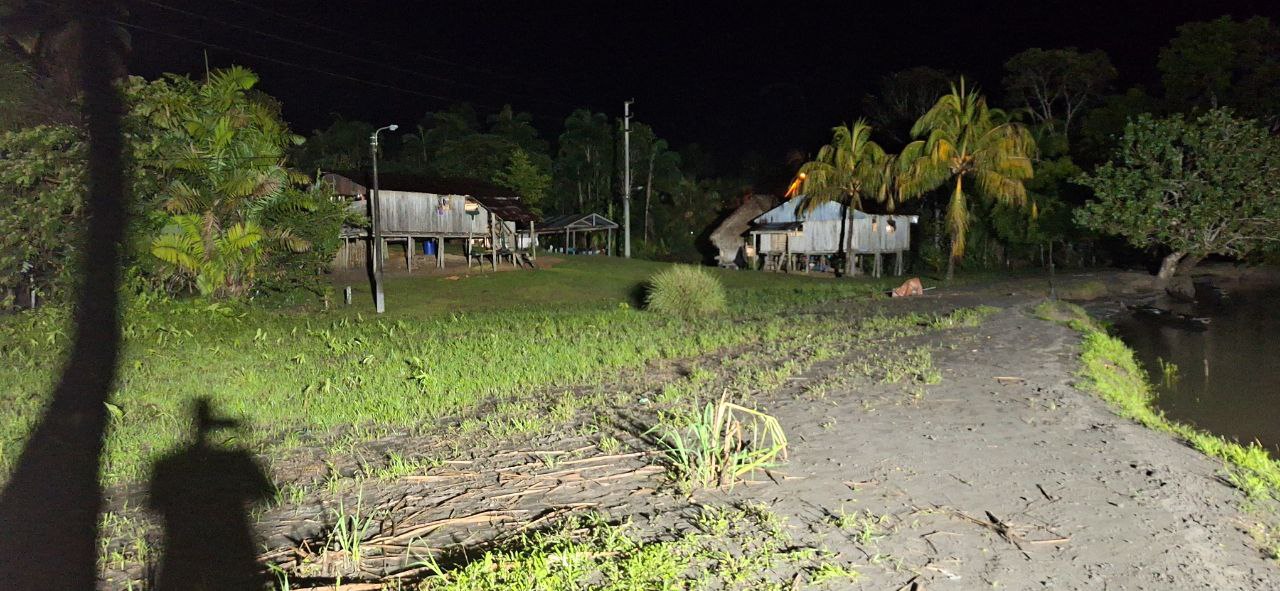
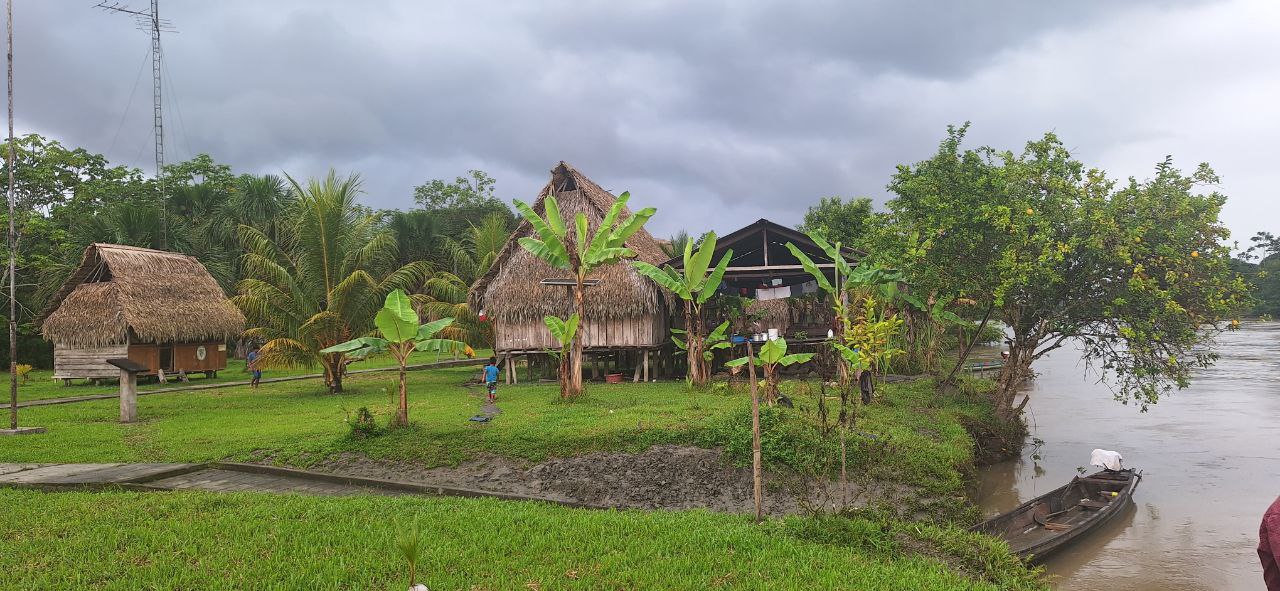
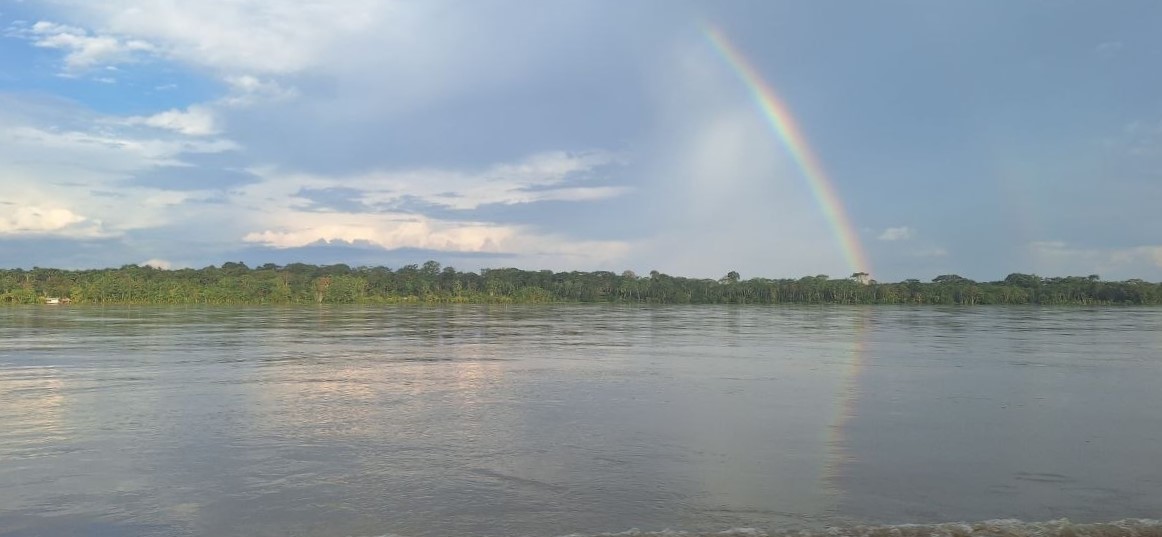
La barca ha capienza per più di cento passeggeri: li caricheremo domani, in un villaggio a metà strada. Ma oggi ci siamo solo io e una coppia ecuatoriana-argentina, in viaggio come me. La navigazione prosegue tra gli stessi panorami: marrone fiume, verde foresta, rosa delfino, azzurro cielo con nuvole bianche e a volte un arcobaleno dopo un temporale. La sera, dopo diverse ore di viaggio, ci fermiamo in mezzo al niente: è tutto buio, ci sono letteralmente cinque palafitte di legno e nient’altro.
Una famiglia del posto ci ospita a mangiare con loro, dentro la palafitta. Sono tutti seduti per terra, uomini da una parte e donne dall’altra. Preparano un tavolo per i loro ospiti: i soci della barca, la coppia, e io. Mangiamo brodo di pollo con pastina, mentre i nostri anfitrioni si passano tra loro grandi caraffe di chicha, che ci fanno assaggiare prima di andarcene. Beviamo tutti dalla stessa coppa: chicha de yuca, fermentata, densa, ma soprattutto parecchio alcolica. E capisco perché è tutta la serata che blaterano e sghignazzano.
La chicha fa effetto: i soci della barca per qualche motivo accendono un enorme speaker e sparano musica a tutto volume durante i nostri cinque minuti di tragitto verso la barca. Poi chiudiamo le porte, spegnamo lo speaker, ci corichiamo sul pavimento, spegniamo le luci e andiamo a nanna.
Il mattino dopo iniziamo presto il viaggio verso Iquitos: ci fermiamo nel villaggio di Santa Clotilde, e la barca si riempie completamente di passeggeri, amache zeppe di bambini, scatole varie e le immancabili gabbie con i cani che ci cagano dentro.
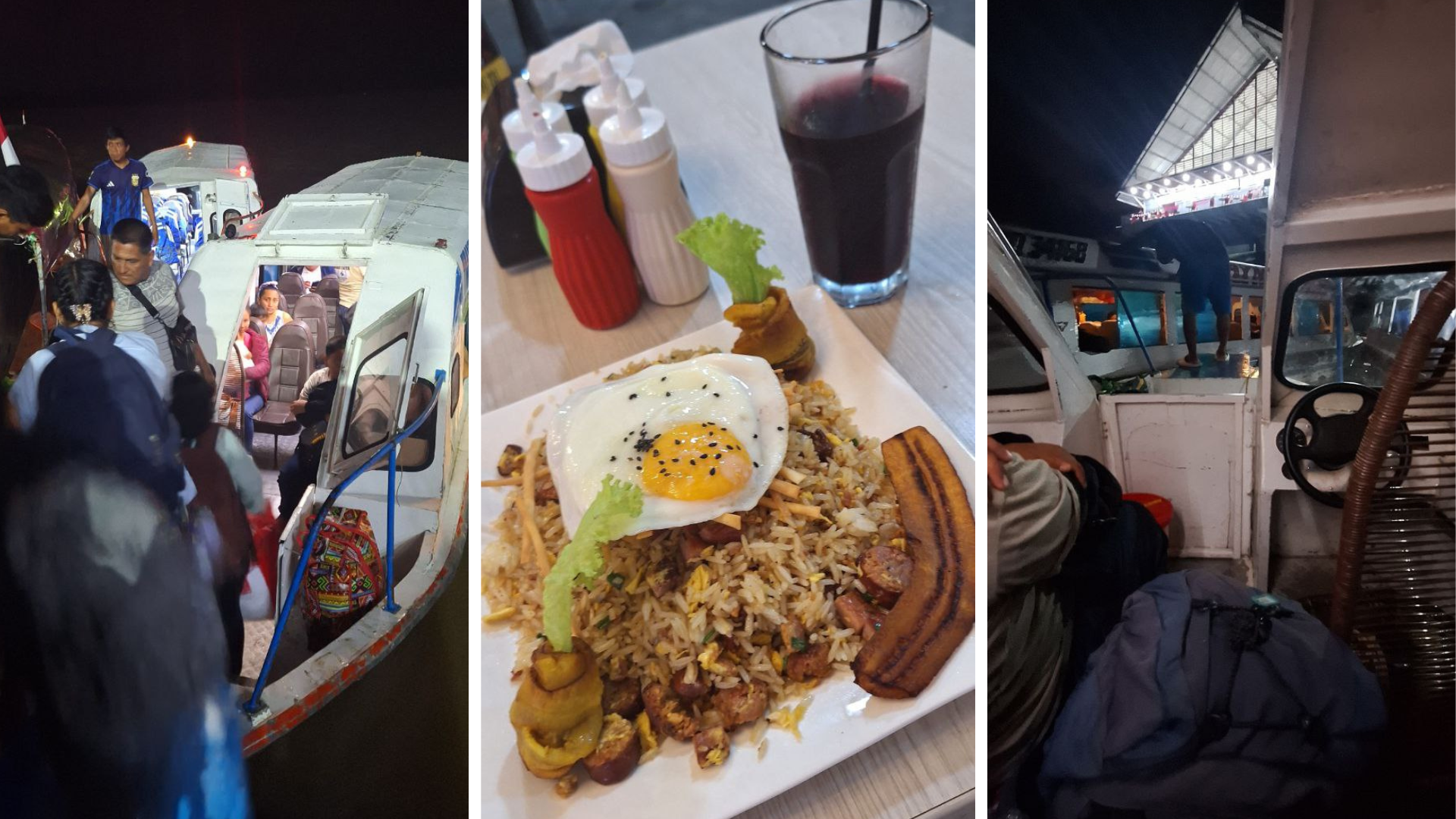
Dopo tutto il giorno di navigazione, i soci della barca ci lasciano a Mazán, quasi a Iquitos. Da lì ci caricano su alcuni tuktuk che ci portano in un molo abbastanza losco. È buio e una lunga folla cerca di entrare in diverse imbarcazioni sgangherate, la vibe è a metà tra zattere per naufragi e campo profughi. Finalmente dopo una lunga calca e un paio di attenzioni non desiderate mi sistemo in una delle barchette, tutto schiacciato con il mio zainone addosso, in prima fila vicino al ‘capitano’. Le barchette procedono a luci spente, piove forte e il capitano non vede una mazza dal vetro opaco e bagnato: solo un povero disgraziato a prua fa luce con un faro e bussa sul vetro quando stiamo per entrare in collisione con qualcosa.
Arriviamo infine al molo di Iquitos: dopo diversi tentativi di truffe tra i tuktuk, il capitano della barca mi aiuta a trovarne uno ‘fidato’ che mi porta al mio hotel, ma cerca di intrufolarsi dentro con me per una mancia extra e viene cacciato dal receptionist.
Passeggio nel centro di Iquitos: la città è abbastanza chiassosa e caotica, come piace a me. Ma stasera ho solo le forze di mangiare un chaufa (la versione peruviana del riso saltato cinese) e andare a letto. Il giorno dopo esploro la città e mi metto in contatto con i disorganizzatissimi responsabili della riserva naturale in cui andrò a fare volontariato. Il piano è chiaro: partenza il giorno successivo all’alba, e poi altre quattordici ore di viaggio, 500km risalendo i fiumi, per raggiungere la riserva Tapiche, sperduta in mezzo alla selva. Lì mi aspetta qualche settimana nel mezzo della foresta Amazzonica: solo io, i pochi lavoratori della riserva e occasionalmente i turisti che vengono a visitarla. La comunità più vicina si trova a cinque ore di barca. Pura natura, l’ecosistema terrestre più biodiverso del pianeta. Vado a dormire con il sorriso sulle labbra, pensando agli abitanti della foresta che vorrei incontrare: boa, giaguari, tarantole, vipere, tapiri, kinkaju, scorpioni, capibara, scimmie, delfini di fiume, formichieri, piranha, insetti, porcospini…
Twelve hours by bus bring me from the Andean highlands to El Coca: the frontier city with the Ecuadorian Amazon. From here my journey will begin, 500 km on the Napo River to Iquitos, Peru, the largest city in the world not reachable by land. In Iquitos I will begin another journey along the rivers to reach the volunteer work I have always dreamed of: a remote reserve in the forest, to save turtle eggs and open trails with the machete. But let’s take it slowly.
The taxi driver who takes me from the bus station to the hostel tells me to ‘tener cuidado por la calle’ (be careful in the street) at that hour of the night. But during the bus ride I only ate choclos tostados (toasted corn) and pepinillos (a sort of small watermelon that tastes like cucumber) and my hunger is bigger than the fear of las calles of El Coca. Hoodie to hide my being a gringo and I head to the neighborhood asadero (grill). Few things make me happier than finding, at two in the morning, the combo rice-beans-pork chops-cabbage-plantain-aji-chicha.
I stay the following two days in El Coca, to wander around and recover my strength before the journey ahead of me. I would like to visit the Waorani (Indigenous people) to hunt with them naked in the forest, eat stewed monkey with rice, and drink the fermented chicha chewed and spit out by their women. But I don’t have the time: the reserve in Peru where I will volunteer awaits me the following week.
I take advantage of this to try food and drinks from the Ecuadorian jungle. Maito is fish wrapped in large plantain leaves with yucca and plantain, cooked on the grill. It is often served with different types of chicha, a fermented drink. I don’t mind chicha de chonta, made from the red fruit of a palm that grows only in the Amazon. In the fallen rotten trunk of the same palm grows a much more tempting snack: chontacuros, fat larvae as big as a thumb, fried or grilled they are crunchy outside and buttery soft inside. Even eaten alive they have their charm, but they lose their crunchy exterior and I feel a bit like Simba.
I discover my new favorite refreshing drink: guayusa is the infusion of a plant similar to mate or green tea, served cold, it tastes like an unsweetened Estathé, but energizing. The guayusa leaves, rolled and hung like garlands, are seen everywhere in comedores or markets.
Here I am no longer in the cool air of the Andes: there is a lot of humidity, and when the sun comes out and hits my head it splits me in two. To protect myself, I buy an extra change of long, light clothing. It will be useful in the coming weeks also against my number one enemy: mosquitoes.
On the morning of the third day, quick breakfast with tigrillo (green plantain chopped and fried with eggs and meat) and I arrive at the dock just in time to get on my first lancha (boat) in the Amazon.
The lancha is crowded and the journey along the Napo River proceeds calmly. I spend the time writing, and now and then chatting with my neighbors. Every now and then the chickens in the jute sacks cluck and some dog puppies spray-shit inside their improvised cages. When it starts to rain we pull down a black plastic tarp that separates us from the rest of the world, and I feel like I’m inside a garbage bag.
After twelve hours and several stops in communities in the middle of nowhere, only a nun with two girls and I remain on the boat. We arrive before sunset in Nuevo Rocafuerte, the last four houses before the border with Peru.
Within an hour I find what I need: the border police for the exit stamp from Ecuador, a room for the night in the back of a minimarket, and an expensive ride to the border the next day. The border is more than an hour by boat and the only way I find to get there is to negotiate a ride with two “fishermen” (they look more like traffickers…). The ride costs me a lot because there are no other travelers with whom to split the fuel cost, and on top of that comes the inevitable implicit “gringo tax”; but for this time it’s fine.
I spend the evening walking among statues of pink dolphins — yes, they really exist and are often seen in these Amazonian rivers — and streets destroyed by the latest floods.
The next morning the two “fishermen” take me to Peru, to the first small border community, Cabo Pantoja. The schedules of the public boats to Iquitos are unpredictable and I expect to have to stop here at least a couple of days to wait for the first one.
Instead, I barely have time to set foot on land — literally — when a bunch of strange characters lean out of the window of a long boat, gesturing and calling me: they tell me they will leave for Iquitos in a few hours. Which will be barely enough time to look for the impossible-to-find border policeman — obviously he is not in the office — to get my passport stamped. At lunchtime a woman hosts me under her canopy to shelter me from yet another sudden downpour. She is preparing food for the boat members, who invite me to eat with them. I have barely crossed the border and I immediately notice the difference in accent: they speak quickly and swallow their words, unlike the clear Ecuadorian speech. After a couple of jokes about mujeres and football (always the best icebreakers that cross any geographical boundary), the crew explains to me that they have recently founded a river transport company and this will be their first trip. We will arrive in Iquitos the evening of the next day, a little more than 24 hours.
The boat has room for more than a hundred passengers: we will load them tomorrow, in a village halfway. But today it’s just me and an Ecuadorian-Argentinian couple, traveling like me. The navigation continues among the same landscapes: brown river, green forest, pink dolphin, blue sky with white clouds and sometimes a rainbow after a storm. In the evening, after several hours of travel, we stop in the middle of nowhere: it is completely dark, there are literally five wooden stilt houses and nothing else.
A local family hosts us to eat with them, inside the stilt house. They are all sitting on the floor, men on one side and women on the other. They prepare a table for their guests: the boat crew, the couple, and me. We eat chicken broth with tiny pasta, while our hosts pass around large jugs of chicha, which they make us taste before we leave. We all drink from the same cup: chicha de yuca, fermented, dense, but above all quite alcoholic. And I understand why they have been babbling and giggling all evening.
The chicha kicks in: the boat crew for some reason turns on a huge speaker and blasts music at full volume during our five-minute walkback to the boat. Then we close the doors, turn off the speaker, lie down on the floor, switch off the lights, and go to sleep.
The next morning we start the journey toward Iquitos early: we stop in the village of Santa Clotilde, and the boat fills completely with passengers, hammocks stuffed with children, assorted boxes, and the inevitable cages with dogs that poop inside them.
After the entire day of navigation, the boat crew drops us off at Mazán, close to Iquitos. From there they load us onto some tuk-tuks that take us to a rather sketchy dock. It’s dark and a long crowd is trying to get onto several rickety boats, the vibe halfway between shipwreck rafts and a refugee camp. Finally, after a long crush and a couple of unwanted attentions, I settle into one of the little boats, all squashed with my big backpack on me, in the front row near the “captain.” The little boats move with the lights off, it’s raining hard and the captain can’t see a damn thing through the foggy and wet glass: only some poor guy at the bow shines a light and knocks on the glass when we’re about to collide with something.
We finally arrive at the dock of Iquitos: after several attempted scams among the tuk-tuks, the boat captain helps me find a “trusted” one that takes me to my hotel, but he tries to slip inside with me for an extra tip and gets kicked out by the receptionist.
I walk around the center of Iquitos: the city is quite loud and chaotic, just how I like it. But tonight I only have the strength to eat a chaufa (the Peruvian version of Chinese fried rice) and go to bed. The next day I explore the city and get in touch with the very disorganized staff of the nature reserve where I will go volunteer. The plan is clear: departure the next morning at dawn, and then another fourteen hours of travel, 500 km upriver, to reach the Tapiche reserve, lost in the middle of the jungle. There a few weeks in the heart of the Amazon rainforest await me: only me, the few workers of the reserve and occasionally the tourists who come to visit it. The nearest community is five hours by boat. Pure nature, the most biodiverse terrestrial ecosystem on the planet. I go to sleep with a smile on my face, thinking of the forest inhabitants I hope to meet: boas, jaguars, tarantulas, vipers, tapirs, kinkajous, scorpions, capybaras, monkeys, river dolphins, anteaters, piranhas, insects, porcupines…
Resta aggiornato Stay updated
Ricevi una mail a ogni nuovo racconto Get an email with every new entry
Niente spam, solo i nuovi capitoli del viaggio - promesso :) No spam, just the new chapters of the journey - I promise :)
Iscrizione completata! Riceverai una mail a ogni nuovo racconto. You're subscribed! You'll get an email with every new entry.
Qualcosa è andato storto. Riprova. Something went wrong. Please try again.